
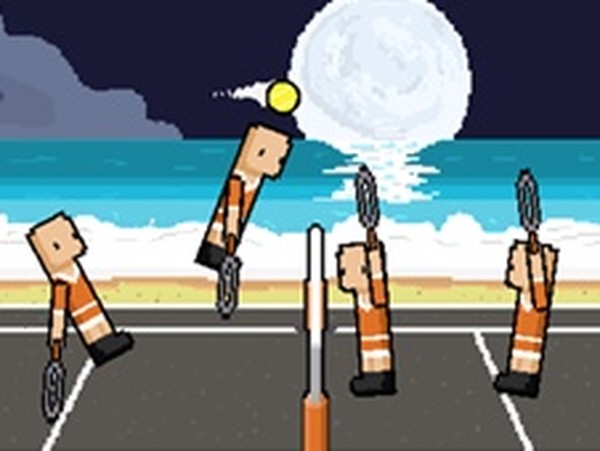
Match Flow & Timing
Every point in Racket Court Challenge depends on precise timing. Players control their character's position and must swing at the right moment to send the ball across the net. The ball's trajectory changes based on where and how it is struck, creating dynamic rallies. Matches progress quickly, with each point decided by who makes the better read of the ball's path. The simple input method keeps the focus on reading the opponent's shots and reacting accordingly.
Competition Formats
Two primary ways to play are available. Solo players can test their reflexes against a computer-controlled opponent that adapts to their playing style. For those who prefer human competition, a local two-player mode lets friends face off on the same device. Both modes use the same core mechanics, so skills developed in one transfer directly to the other. This structure encourages repeated play without requiring lengthy commitments.
Control Adaptations
The control scheme changes depending on the platform. On desktop computers, each player uses a single keyboard key to trigger their swing. Mobile devices utilize touch controls that respond to taps on the screen. These touch inputs are designed to feel natural on smaller displays, preserving the same timing-based gameplay. The unified design means players can switch between devices without relearning the fundamentals.
Physics-Driven Interactions
Ball behavior is governed by a physics engine that simulates realistic movement. Factors like swing timing and the angle of the racket face influence where the ball lands. This system introduces variability into each rally, preventing matches from feeling repetitive. Players must account for the ball's speed and spin, which change based on how it was last struck. The physics layer adds depth without complicating the basic rules.
COMMENTS
0 comments