
● REVIEWS
Chill Courier Puzzle Quest stands out for its clean design and thoughtful difficulty curve. The warm beam hazards are intuitive to understand but require careful timing to navigate. Safe zones add a layer of strategy, letting players pause and reassess. The gradual introduction of moving beams keeps the challenge fresh. It is a satisfying choice for anyone who enjoys pattern-based puzzles in short, focused sessions.
● ABOUT THIS GAME
Core Concept & Objective
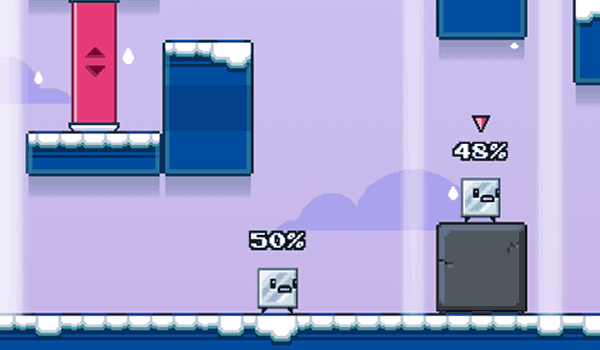
Chill Courier Puzzle Quest places players in control of a small ice block that must travel across each stage to deliver an important message. The twist is that the environment contains beams of warm light that can melt the ice block instantly. Players must study the layout, identify safe pathways, and move with purpose. The game blends careful planning with moment-to-moment decision making, as each stage presents a unique arrangement of hazards and resting points.
Hazard Design & Variety
The primary threat comes from light beams that appear in fixed positions or sweep across the stage. Some beams remain stationary, while others rotate or slide along set paths. Later stages introduce multiple beams that cross each other, requiring players to find brief openings. Safe zones appear as shaded areas where the ice block can pause without risk. These spots become essential for observing patterns and planning the next sequence of moves. The variety keeps each stage feeling fresh without relying on random elements.
Visual Style & Atmosphere
The game uses bright, clean visuals that make hazards easy to spot. The ice block stands out against the background, and beam paths are clearly indicated. Colors remain cheerful and non-threatening, which makes the experience suitable for younger players. The overall presentation focuses on clarity, so players can focus on solving the layout rather than deciphering unclear graphics. This design choice supports the game's pick-up-and-play nature.
Progression & Difficulty Curve
Early stages introduce the basic movement and single stationary beams. As players advance, beams begin to move, and multiple hazards appear in the same stage. The difficulty increases gradually, allowing players to build confidence with each new element. Checkpoints or retry options help reduce frustration, making it easy to attempt a stage multiple times. The curve ensures that players feel challenged but not overwhelmed, with each stage offering a clear puzzle to solve.
Session Length & Replayability
Stages are designed to be completed in short sessions, often under a few minutes each. This structure makes the game ideal for quick breaks or casual play. Players who enjoy perfecting their runs can aim for faster completion times or fewer mistakes. The pattern-based nature of the hazards encourages repeated attempts, as memorizing beam timings becomes a satisfying skill to develop. There is no penalty for retrying, so experimentation is encouraged.
COMMENTS
0 comments