
● REVIEWS
Cloud Dash Pilot 2D Flight succeeds by focusing on what makes arcade games enjoyable: responsive controls and clear objectives. The mission variety keeps each play session interesting, and the gradual difficulty curve ensures you never feel stuck. The power-up system adds a welcome layer of strategy without overcomplicating things. While it won't replace deeper flight simulators, its pick-up-and-play nature and family-friendly presentation make it an excellent choice for casual gamers or anyone looking for a relaxing yet engaging aerial challenge.
● ABOUT THIS GAME
Core Flight Mechanics
Cloud Dash Pilot 2D Flight places you behind the controls of a nimble aircraft moving through a side-scrolling sky. The primary controls involve directing your plane up, down, left, and right to avoid incoming hazards such as floating debris and enemy projectiles. A single action button lets you perform special maneuvers to clear paths or neutralize threats. Success depends on smooth, precise handling rather than speed alone. The game rewards players who learn to anticipate obstacles and plan their route ahead of time.
Mission Structure and Objectives
Each level presents a distinct goal, such as reaching a distant checkpoint, protecting a stationary target from waves of attackers, or surviving a timed gauntlet of hazards. The objectives grow more complex as you progress, introducing new obstacle patterns and requiring faster reactions. Some missions emphasize defensive play, while others push you to navigate tight corridors or chase moving targets. This variety keeps the experience fresh and encourages you to adapt your approach for each scenario.
Power-Ups and Strategic Items
Scattered throughout the skies are helpful items that temporarily boost your capabilities. A shield power-up grants a brief period of invulnerability, allowing you to pass through dangerous zones without harm. Speed boosts increase your velocity, which can help you outrun threats or reach objectives faster. Collecting these items at the right moment can turn a difficult situation into a manageable one. Knowing when to grab a power-up versus when to avoid a risky detour adds a layer of strategy to each flight.
Visual Style and Atmosphere
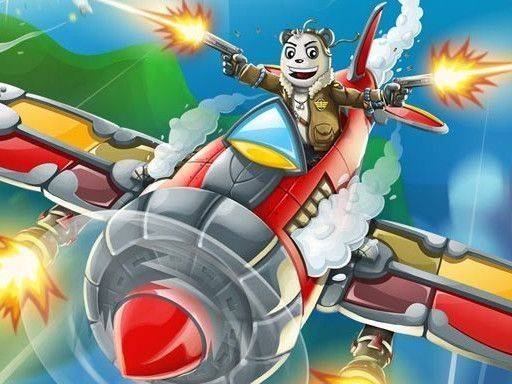
The game uses bright, cheerful colors and simple 2D art to create an inviting world. Clouds, birds, and changing sky gradients provide a sense of motion and depth. The visual design avoids anything dark or intense, making it suitable for younger players. Sound effects are light and upbeat, reinforcing the game's relaxed yet focused tone. The overall presentation supports the idea that this is a game about skill and enjoyment, not conflict or stress.
Progression and Difficulty Curve
Early missions introduce basic controls and simple obstacle patterns, giving new players time to build confidence. As you advance, the game introduces faster enemies, tighter spaces, and more complex objective combinations. The difficulty increases gradually, so you never feel overwhelmed. Each completed mission unlocks the next, and your performance is tracked through a scoring system that rewards accuracy and efficiency. This structure encourages repeated attempts to improve your results and master each stage.
Accessibility and Replay Value
The controls are straightforward enough for beginners to pick up quickly, but mastering the later missions requires practice and patience. There are no complicated menus or steep learning curves. The game's short mission lengths make it easy to play in brief sessions, while the increasing challenge gives experienced players a reason to return. The focus on personal improvement rather than competition makes it a relaxing yet engaging experience for anyone who enjoys skill-based arcade games.
COMMENTS
0 comments