
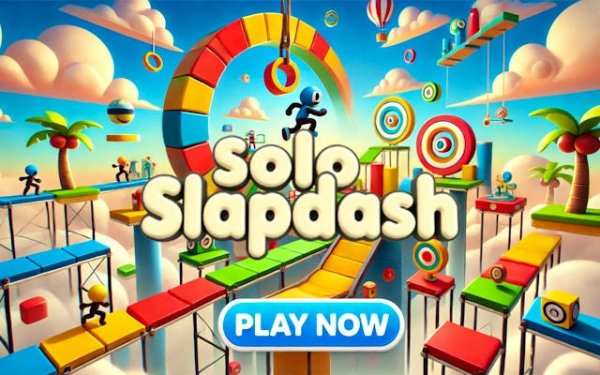
Core Gameplay Loop
In Single Path Runner, players take control of a character moving forward through a series of three-dimensional courses. The primary action involves tapping or clicking to make the character jump at the right moments. Success depends on reading the environment and reacting to obstacles that appear along the path. There are no complex button combinations or special abilities to manage. The experience is built around a simple loop: observe the upcoming challenge, time your action, and progress further. This straightforward design makes the game accessible to newcomers while still offering room for those who want to perfect their runs.
Course Design and Variety
Each level in Single Path Runner is constructed with a distinct set of barriers and moving parts. Players might encounter swinging beams that require precise timing to pass under, or gaps that demand a well-measured jump. The courses are arranged in a sequence that gradually introduces new elements, so players are never overwhelmed early on. The visual style uses bright colors and clear shapes, making it easy to spot upcoming hazards. This clarity helps players focus on the timing aspect rather than struggling to see what is ahead. The variety in course layouts ensures that repeated playthroughs feel different each time.
Physics and Feedback
The game uses a physics system that affects how the character interacts with obstacles and surfaces. When a player makes contact with a barrier, the character reacts in a way that feels responsive and consistent. This feedback helps players understand what went wrong and adjust their approach for the next attempt. The physics also add an element of unpredictability to each run, as slight variations in timing can lead to different outcomes. This system encourages players to experiment with their timing and learn the nuances of each course. The result is a satisfying loop of trial and improvement.
Visual and Audio Atmosphere
Single Path Runner presents its courses with a clean, colorful art style that avoids clutter. The environments are designed to be pleasant to look at during fast-paced play, with distinct color palettes for each level. The audio complements the visual experience with sound effects that signal successful jumps or collisions. This combination of sight and sound helps players stay engaged and aware of their progress. The overall atmosphere is lighthearted and inviting, making it suitable for players of various ages. The design choices prioritize clarity and enjoyment over complexity or intensity.
Progression and Personal Goals
Since the game is focused on solo play, progression is tied to personal achievement rather than competing against others. Players can set their own goals, such as reaching a new distance or completing a course without any mistakes. The game provides clear feedback on performance, allowing players to track their improvement over time. There are no external pressures or leaderboards that might discourage casual players. This structure makes Single Path Runner a good choice for those who prefer to play at their own pace. The emphasis is on the satisfaction of mastering a course through practice and patience.
COMMENTS
0 comments